The Visionary of Your Second Act
If your body is a high-speed locomotive, Vitamin A is the specialised maintenance crew for your headlights and your external casing (skin).
It isn’t just about seeing in the dark; it’s about cellular communication and keeping your immune system on the right track.
🥳 What “Vitamin A” Brings to the Party
Vitamin A is a fat-soluble powerhouse that plays three critical roles for the midlife traveller:
- The Night Visionary: It’s a key component of rhodopsin, the protein in your eyes that allows you to see in low-light conditions.
- The Shield: It supports the “barrier” defences—your skin, lungs, and gut—helping to keep pathogens from boarding your system.
- The Architect: It’s essential for cellular turnover. In midlife, this means helping your skin stay resilient and supporting bone health.
✅ The Pros: Why You Need It
- Anti-Ageing Power: Topically (as Retinol) and internally, it’s the gold standard for skin repair and reducing fine lines.
- Immune Acceleration: It helps produce white blood cells that capture and “archive” bacteria and viruses.
- Organ Support: It plays a vital role in the normal formation and maintenance of the heart, lungs, and kidneys.
❌ The Cons: The Speed Bumps
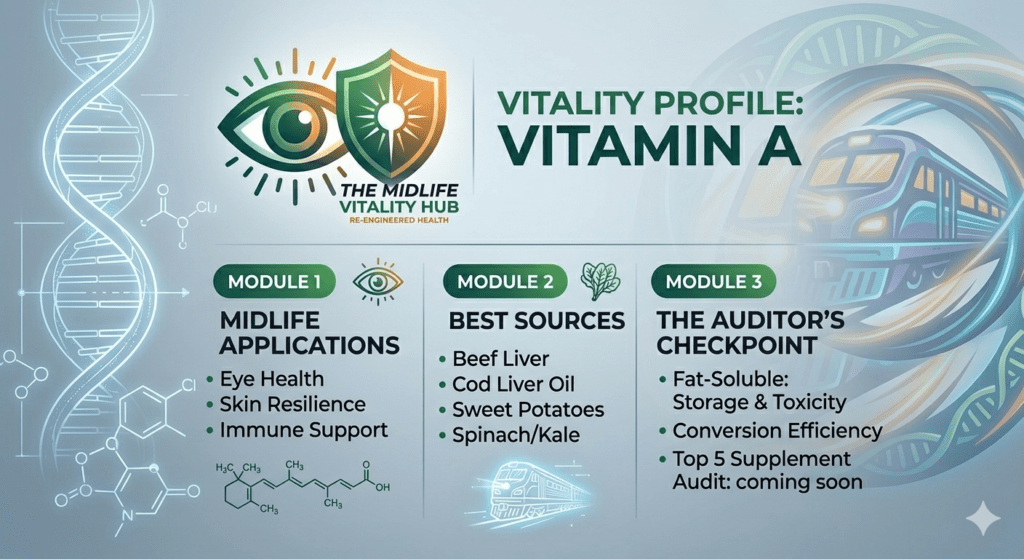
- The Toxicity Trap: Because it’s fat-soluble, your body stores it. Taking too much (especially from supplements) can lead to “Hypervitaminosis A,” which can cause dizziness and even liver damage.
- Teratogenic Risk: High doses are dangerous during pregnancy (important for the “Purpose” side of our brand’s community outreach).
- Supplement Sensitivity: Beta-carotene (the plant version) is generally safe, but pre-formed Vitamin A (Retinol) needs to be managed carefully.
🥗 The “Fuel” Sources (Where to Find It)
- Animal-Based (Retinoids): Beef liver (the king of Vitamin A), cod liver oil, eggs, and dairy.
- Plant-Based (Carotenoids): Sweet potatoes, carrots, spinach, and kale. Note: Your body has to convert these into active Vitamin A, so eating them with a little healthy fat helps the “engine” absorb them.
🧭 The Conductor’s Verdict
For the midlife traveller, Vitamin A is essential for keeping your “sensors” sharp as you age.
For the midlife demographic, focus on getting your intake through whole foods (like that morning spinach smoothie or a roasted sweet potato) before jumping into high-dose supplements.
If you do supplement, stick to the Beta-Carotene form to allow your body to regulate its own production levels.